
 ClerkChat
How Tibo Maker makes $2m MRR selling SAAS as an indiehacker
ClerkChat · Sep 2, 2026 · 6 min read
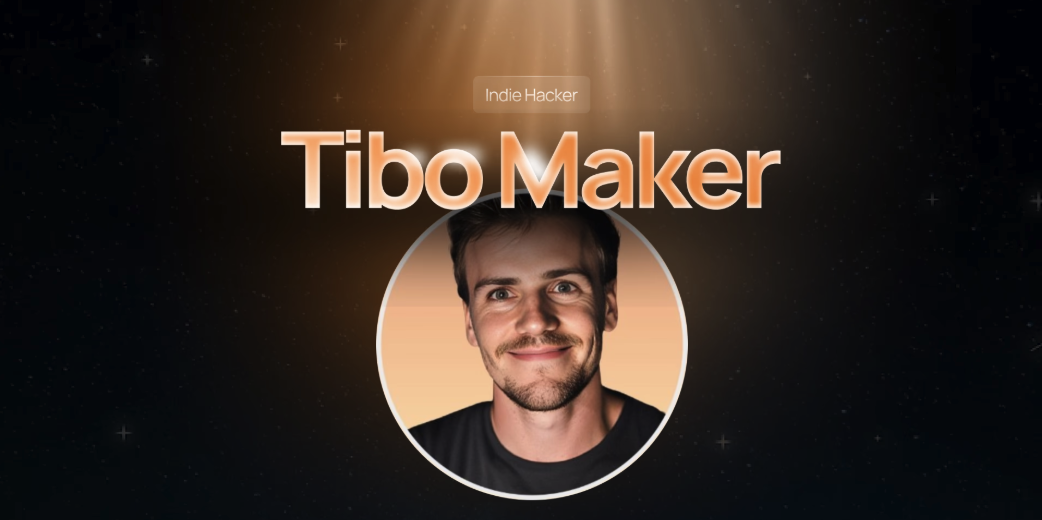
Tibo Maker’s public story is a bootstrapped portfolio of creator tools, not a verified $2M MRR machine. Available primary signals point to sequential products aimed at founders and marketers who need content, distribution, and traffic without large teams. The useful lesson is how he sequenced pain points, shipped fast, and reused the same audience rather than chasing a single unicorn number.
If you are an indie founder deciding whether to copy a multi-product stack, judge three things: whether you already own a channel where buyers hang out, whether each new product reuses that channel, and whether you can live with platform risk (X APIs, Notion, Reddit rules, AI costs). Vanity MRR screenshots matter less than retention and cross-sell reality.
First products: Tweet Hunter and Taplio
Tweet Hunter targets X/Twitter growth: viral tweet discovery, scheduling, and AI-assisted writing so creators post consistently. Taplio does the LinkedIn version: ideas, scheduling, analytics, and engagement for professional audiences.
Public accounts describe a classic indie arc. He built in public on X, shipped a narrow MVP around ideation and posting friction during the creator boom, then iterated. Stack details are sparse in primary sources; the pattern matches common indie choices (modern web app, Stripe billing, heavy API use). Customer acquisition leaned on organic X threads with growth screenshots, Product Hunt launches, maker communities such as Indie Hackers, SEO on tool keywords, and word of mouth. Paid acquisition stayed light.
Revenue for these two has been self-reported in the tens to hundreds of thousands of dollars MRR range at peaks across public threads and interviews, with exact current splits and churn unpublished. Treat every figure as unaudited. The durable asset was the audience of founders and creators who later became buyers for the next tools.
Later products: same audience, new jobs
Revid.ai. revid.ai turns scripts or text into short-form video (Reels, Shorts, TikTok-style) with AI voice, visuals, and editing automation. Built as a rapid MVP on third-party AI APIs after the content-tool base was proven, timed to the AI video wave. Acquisition: cross-promo from Tweet Hunter/Taplio users, demo clips on X, Product Hunt, SEO for AI video generators, freemium trials. Revenue is subscription-based and not broken out publicly; it sits in a crowded field against tools like InVideo-class products. Strength is speed for non-editors. Weakness is AI cost and quality variance.
Outrank.so. outrank.so automates SEO-oriented content and ranking workflows so teams chase organic traffic with less manual production. Built by extending prior content-generation pipelines with LLM writing plus search data. Acquisition: dogfooding SEO, X threads on traffic results, cross-sell to existing subscribers who needed top-of-funnel, Product Hunt, partnerships. Status: active subscription product; isolated MRR and verified case-study traffic are not published in durable primary sources. Competition from established SEO suites is real.
SuperX.so. superx.so focuses on growing on X: analytics, suggestions, scheduling, engagement help. It reads as an evolution of Tweet Hunter experience after platform and algorithm shifts. Built with X API integrations and AI tweet assistance. Acquisition: migration and cross-promo from the earlier X audience, build-in-public threads, communities. Revenue tracks creator-economy health on X and remains self-reported without a clean public breakdown. Platform dependency is the main risk.
PostSyncer.com. postsyncer.com is multi-platform publishing: write once, push to X, LinkedIn, Instagram, and similar channels from one queue. Natural extension of single-network tools into omnichannel scheduling. Built via social API integrations and queue logic. Acquisition: upsell to users tired of tab-switching, “post everywhere” content, Product Hunt, SEO. Competes with Buffer-class schedulers; differentiation depends on simplicity and portfolio bundling more than feature depth. Revenue share inside the portfolio is unpublished.
Bazzly.ai. bazzly.ai targets Reddit customer acquisition: find threads, draft replies or posts, monitor opportunities with AI assistance. Built after spotting Reddit as an under-used indie channel, with generation and monitoring pipelines tuned to sound less robotic. Acquisition: X and Indie Hackers outreach to SaaS founders, case-style posts, freemium, cross-promo. Newer and niche. Revenue is early-stage relative to the flagship social tools. Reddit policy and ban risk are material.
Feather.so. feather.so turns Notion pages and databases into hosted blogs with themes, domains, and basic SEO. Built as a thin publishing layer on the Notion API for people who refuse WordPress. Acquisition: Notion communities, r/Notion-style forums, Twitter Notion circles, Product Hunt, “Notion blog” SEO, cross-sell to writers already in the portfolio. Freemium plus hosting-style subscriptions. Steady while Notion’s audience grows; longevity depends on staying ahead of native Notion publishing and peers such as Super.so-class tools.
How distribution actually works
Across the stack the repeated channels are: building in public on X as the primary surface, Product Hunt launches for spikes, SEO and content for compounding intent, email lists, affiliates, and maker communities (Indie Hackers, relevant subreddits, LinkedIn). Cold outbound is rare. Social proof (screenshots, shipping logs) does more than polished brand films. Cross-promotion inside the portfolio is the moat: a Tweet Hunter user already understands the billing relationship and the founder’s taste.
Build method stays consistent: feel the pain personally or from the audience, ship an MVP in weeks, charge early with subscriptions, use AI and APIs for leverage, keep the team small. Bootstrapped posture is the default in public materials; large VC rounds are not part of the documented story.
Revenue reality check
The working claim of $2M MRR does not hold up against available primary sources. Public indie reports and threads historically place stronger products in a high-four to six-figure MRR band at times, with the full portfolio hard to sum because breakdowns, churn, and dates are incomplete. Aggregated $2M MRR would imply roughly $24M ARR and would usually leave clearer third-party traces than currently exist. Individual products likely vary widely; newer ones such as Bazzly sit earlier on the curve. All numbers are self-reported unless audited financials appear. Re-check product sites and the founder’s X presence before you treat any figure as current.
Tradeoffs are plain. Portfolio diversification hedges single-product death but splits focus and multiplies API and compliance risk. Audience ownership on X compresses CAC until the algorithm or API terms change. AI features raise gross margin pressure when usage spikes.
Practical decision framework
Copy the sequencing, not the mythic revenue. Start only if you already have a channel where buyers complain in public. Ship one narrow tool that removes a daily friction for that channel. Monetize immediately. Add the next product only when it reuses the same buyers and the same distribution muscle. Measure cross-sell and retention before celebrating top-line MRR.
Skip this model if you lack an owned audience, cannot ship weekly, or need enterprise procurement cycles. In that case a single deeper product with clearer switching costs beats a thin tool shelf.
Next step: open the live product homepages above, read current pricing and positioning yourself, and follow recent shipping posts on X. Decide from primary pages and your own buyer interviews, not from recycled MRR lore.
Build support that knows your business.
Turn the content your team already trusts into useful customer answers.
- Connect your website, docs, and FAQs
- Launch a customer-facing agent in minutes
More from ClerkChat
Keep reading

How Fast Should You Reply to a Website Enquiry?
Leads contacted within five minutes qualify far more often than those left for half an hour; most firms still average one to two days, and first responders win the majority of deals.
ClerkChat · Sep 2, 2026

How to Close High-Ticket Deals by Answering Buyer Questions
Beginners close more high-ticket deals when they lead with SPIN-style discovery, isolate the real objection, and give buyers a clear next step instead of pressure.
ClerkChat · Sep 2, 2026

AI Chatbots vs Hiring Support: Real Cost Breakdown
A loaded US support hire often runs $55k–$80k+ a year before turnover; a grounded AI agent plus a smaller human bench usually wins on cost once volume is steady.
ClerkChat · Sep 2, 2026